


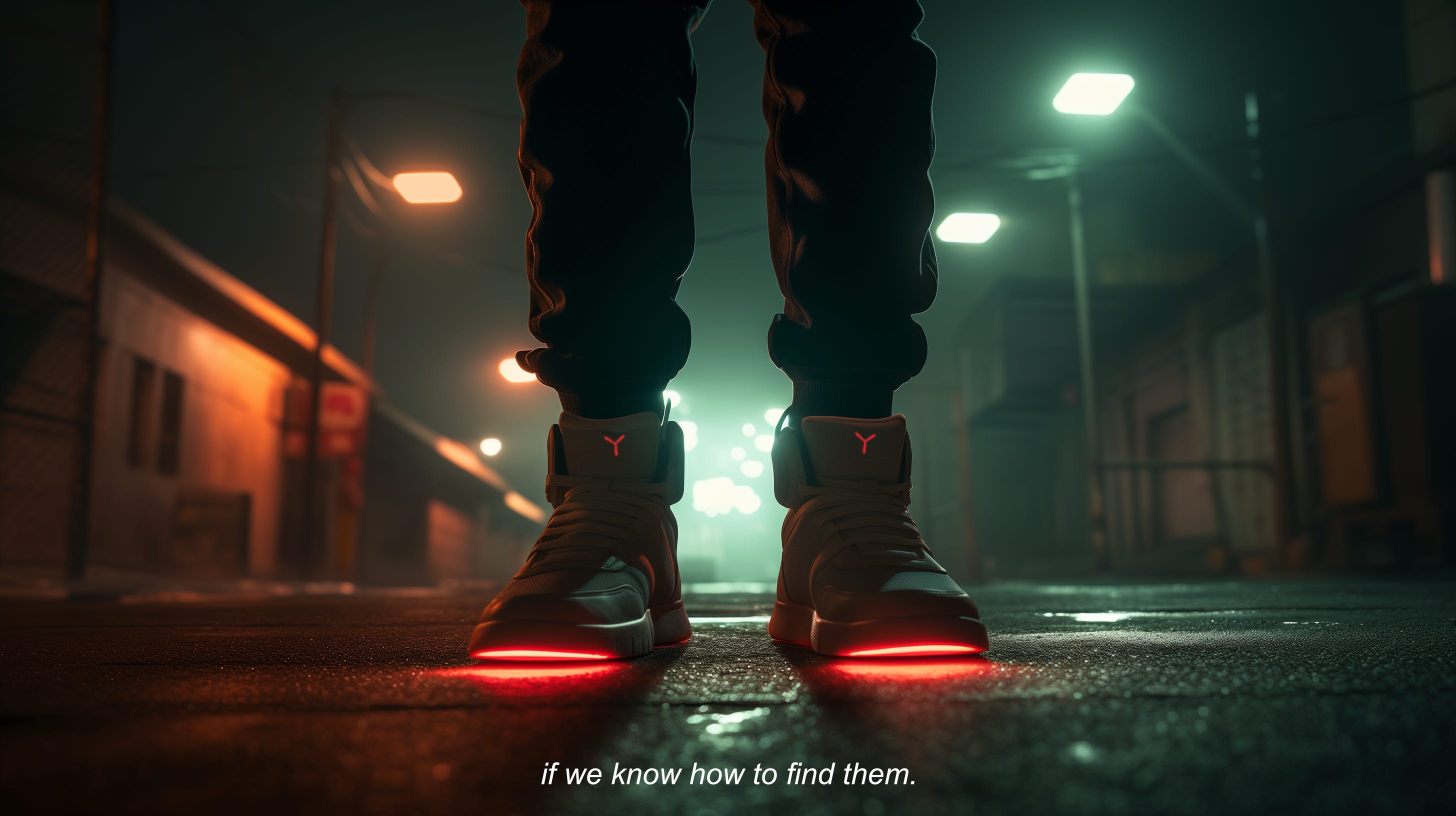
In December 2022 my friend Trae and I started a shoe company. That was when I started playing with Midjourney, the generative AI software that produces images from text prompts, which had just been released five months earlier.
At that time, I found it very hard to produce works of architecture that were not pure fantasy. But Midjourney was (and still is) excellent at creating shoes, especially sneakers, that were both realistic looking and delightfully new.
For some background, Trae and I initially forged our friendship in architecture school after finding out we both grew up as kids drawing sneaker designs for Nike. I’m not sure that makes me a “sneakerhead,” but I appreciate a well-designed shoe.
With this new software tool at our disposal, we decided to play the “what-if” game, creating a theme for our text prompts and seeing what designs we could come up with after a few weeks.
One theme was to “imagine if architects Renzo Piano and Richard Rogers had won a competition in 1971 to design the first Nike instead of the Centre Pompidou.”
Another theme was to “imagine a shoe designed by the members of Pink Floyd if they never quit architecture and deprived us of the bliss that is watching the Jupiter and Beyond the Infinite sequence sync to Echoes.”
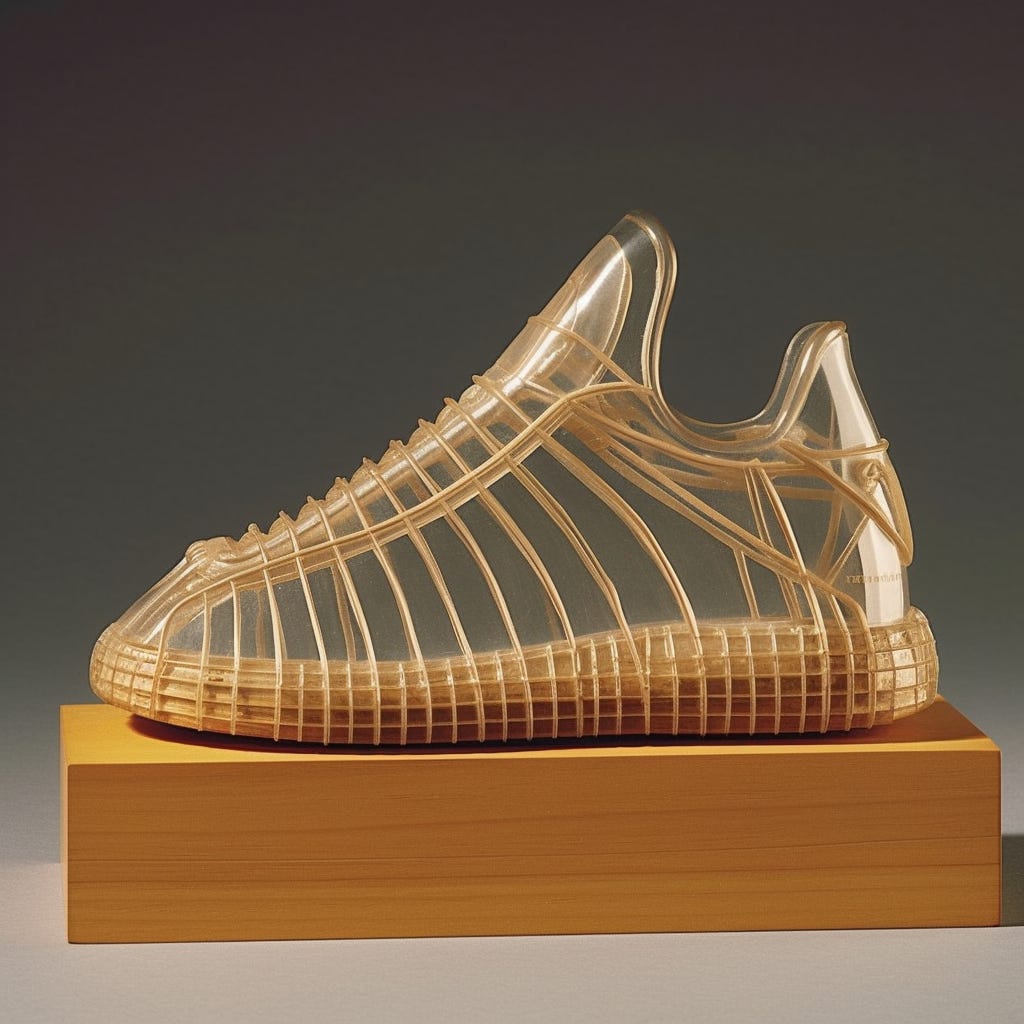
In reality, we had not actually started a shoe company. We had set up a fictional framework to make the designs real enough for us, just as the movie Back to the Future Part II did for the Nike Air Mags. This was our way of applying critical design while learning about and experimenting with prompt engineering.
It turns out this framework has a name: design fiction.
To be honest with you, until that time I did not know design fiction was the thing it is today, which is a specific practice used in both academic and professional settings. I suggest you look it up and the work of its main proponents.
As architectural designers, design fiction was an inherent part of our education in architecture school, even if we didn’t use the term back then. Architectural design is most successful when it is rooted in a story of its own making that is culturally significant.
Looking back in this new light, I find design fiction to be the best framework and mental model for producing works of speculative design, and that’s because it is extremely freeing.
In contrast to frameworks where you are trying to forecast a specific future, especially involving a new or emerging technology, design fiction works by starting in a fictional future and working backwards. Design fiction frames a problem rather than trying to guess the right one.
Importantly, design fiction also works by producing a prototype of some kind, like our sneaker designs. A more common prototype in the design fiction world, especially in product design, is a user manual for the fictional thing that has been designed. For me, I find it incredibly easier to produce a fictional user manual than to try to guess about how something might work in the future. It’s a perfect starting point for further iteration, which is a key part of the design process.
In other words, you don’t have to be right. You just have to create an alternate world where the thing being designed is real. Then you iterate on that world.
This is where design fiction serves as the perfect tool for strategy, whether that is design or business strategy. As Roger Martin would say, the most important question in formulating strategy is to ask the question “what would have to be true?” as opposed to the question “what is true?” For more on this line of questioning, read this article by Martin.
What is also great about design fiction is that it creates a context for people to see a certain future, which ultimately makes it easier for those futures to come true. We see this with movies all the time, where something appearing once in a film years or decades ago is now reality. That is why the tagline over at sneakerfiction (our shoe company) is this:
In fiction lies the future.
As Trae and I discovered, combining design fiction with generative-AI (which I’m calling generative design fiction), is an excellent pathway to innovation. It’s the perfect combination of a strategic design framework with the rapid iteration of design ideas centered around narratives. I encourage you to try it for yourself.
In any case, this won’t be the last time I write on this framework and mental model. I hope to illustrate some more examples of how generative design fiction can work for designing for technology in the built environment. Stay tuned for more.